



Berberine has in recent years established itself as one of the most promising natural dietary supplements for metabolic health. This plant-based alkaloid, extracted from various herbs for over a thousand years in traditional Chinese medicine, has attracted scientific interest for its ability to affect cellular processes at a fundamental level. For individuals seeking natural alternatives to support blood sugar levels, metabolic function, and overall well-being, berberine supplements offer an evidence-based solution with well-documented effects.
What is Berberine and How Does It Work?
Berberine is a bioactive compound belonging to the isoquinoline alkaloid group, naturally occurring in several plants including barberry, goldenseal, and coptis. The yellow color that characterizes these plants comes from berberine, which has historically been used as both a dye and a medicinal substance.
Cellular Mechanism of Action
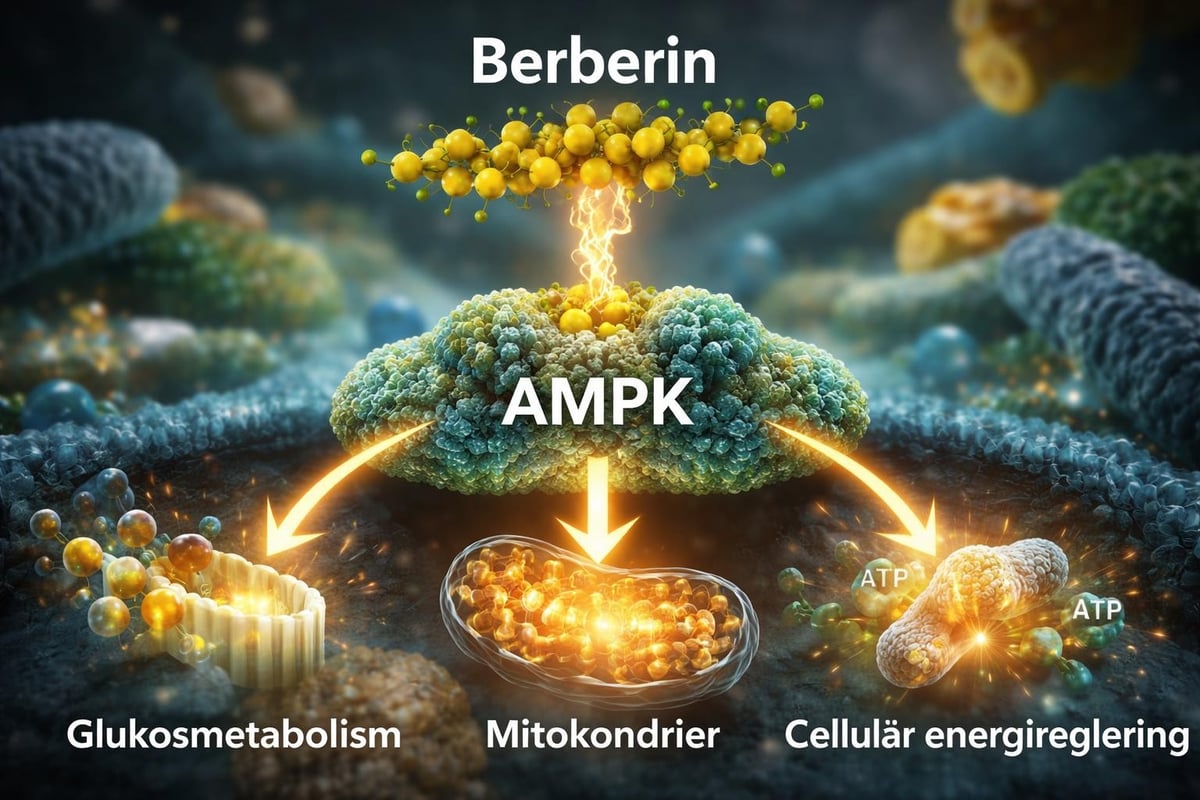
When you take berberine supplements, an enzyme called AMP-activated protein kinase (AMPK) is activated, often referred to as the body's "metabolic master switch." This enzyme plays a central role in energy metabolism by:
- Regulating glucose uptake in muscle cells independently of insulin
- Improving mitochondrial function for more efficient energy production
- Modulating lipid metabolism affecting cholesterol and triglyceride levels
- Activating cellular repair processes such as autophagy
This activation of AMPK explains why berberine is often compared to metformin, a pharmaceutical drug for type 2 diabetes, despite berberine being a natural plant-based substance.
Scientifically Proven Health Benefits
Blood Sugar Control and Insulin Sensitivity
Research shows that berberine supplements can be particularly effective for individuals with metabolic challenges. Clinical studies have demonstrated significant improvements in glycemic control.
A meta-analysis from 2015 reviewing 27 clinical studies found that berberine improved fasting blood sugar levels, HbA1c values, and postprandial blood sugar in patients with type 2 diabetes. The effect was comparable to conventional antidiabetic drugs.
| Parameter | Change with Berberine | Timeframe |
|---|---|---|
| Fasting Blood Sugar Drop | -15-20% | 3 months |
| HbA1c Reduction | -0.7-1.0% | 3 months |
| Insulin Sensitivity | +30-40% | 8-12 weeks |
| Postprandial Sugar | -25% | 3 months |
Cardiovascular Health
Berberine affects several risk factors for cardiovascular diseases by modulating the lipid profile. Studies consistently show that the supplement can:
- Reduce LDL cholesterol by 20-28%
- Reduce total cholesterol by 15-25%
- Lower triglycerides by 20-35%
- Increase HDL cholesterol by 2-8%
This effect is achieved by berberine inhibiting a protein called PCSK9, leading to increased clearance of LDL cholesterol from the blood.
Weight Management and Body Composition
For individuals seeking to optimize weight and metabolic health, berberine supplements offer several beneficial mechanisms. Many also combine berberine with other supplements for metabolic health for more comprehensive support.
A 12-week study in individuals with metabolic syndrome showed an average weight loss of 2.3 kg, with a particular reduction in visceral fat.
- Improve brown fat activation which increases energy expenditure
- Regulate appetite hormones such as leptin and ghrelin
- Optimize insulin signaling which reduces fat storage
- Modulate the gut microbiome for improved metabolic health
Dosage and Optimal Use
Recommended Dosage
Standard dosage for berberine supplements is based on clinical research and typically recommends:
Standard Dose: 500 mg, 2–3 times daily (total 1000–1500 mg per day)
Timing: Take berberine with meals to maximize absorption and minimize potential gastrointestinal side effects.
Build-up Strategy
| Week | Morning Dose | Midday Dose | Evening Dose | Total Daily Dose |
|---|---|---|---|---|
| 1-2 | 250 mg | - | 250 mg | 500 mg |
| 3-4 | 500 mg | - | 500 mg | 1000 mg |
| 5+ | 500 mg | 500 mg | 500 mg | 1500 mg |

Synergy with Other Supplements
Berberine can be combined with other natural supplements for enhanced effects, particularly in metabolic health and cognitive performance.
Berberine and Nootropics
For individuals interested in mental performance and focus, berberine can complement nootropics by stabilizing energy metabolism in the brain. Stable blood sugar is an important foundation for concentration, focus, and mental endurance.
Strategic Combinations
For metabolic health
- Berberine + cinnamon for improved insulin sensitivity
- Berberine + alpha-lipoic acid for antioxidant support
- Berberine + chromium for glucose metabolism
For cardiovascular health
- Berberine + omega-3 for anti-inflammatory support
- Berberine + CoQ10 for mitochondrial energy
For gut health
- Berberine + probiotics for microbiome balance
- Berberine + prebiotics for improved gut function
Integration into Lifestyle and Diet
Berberine works best as part of a holistic strategy for health and performance.
Diet: Combine with a balanced diet rich in vegetables, fiber, and protein.
Exercise: Physical activity also activates AMPK, the same enzyme affected by berberine.
Sleep: For optimal recovery and hormone balance, many combine berberine with supplements for better sleep.
Stress: Chronic stress can counteract metabolic improvements. Adaptogenic supplements and stress management can therefore be a valuable complement.
Summary
Berberine supplements represent a powerful combination of traditional herbal medicine and modern science. Studies show clear effects on blood sugar control, cholesterol levels, and metabolic health.
By combining berberine with the right lifestyle and high-quality supplements, you can create a strong foundation for long-term health, energy, and performance.